
Utah Traffic Court Records
A Utah traffic ticket usually lands in the Justice Court covering where the alleged violation happened. The clerk there keeps the citation docket: the hearing, the disposition, payment status, and any FTA entry. Xchange reaches eligible District and Justice Court matters. Yet only the local Utah court can confirm a current balance, a filed order, or a certified copy. The Utah Courts Justice Court overview describes these limited-jurisdiction courts and the traffic matters they commonly hear.
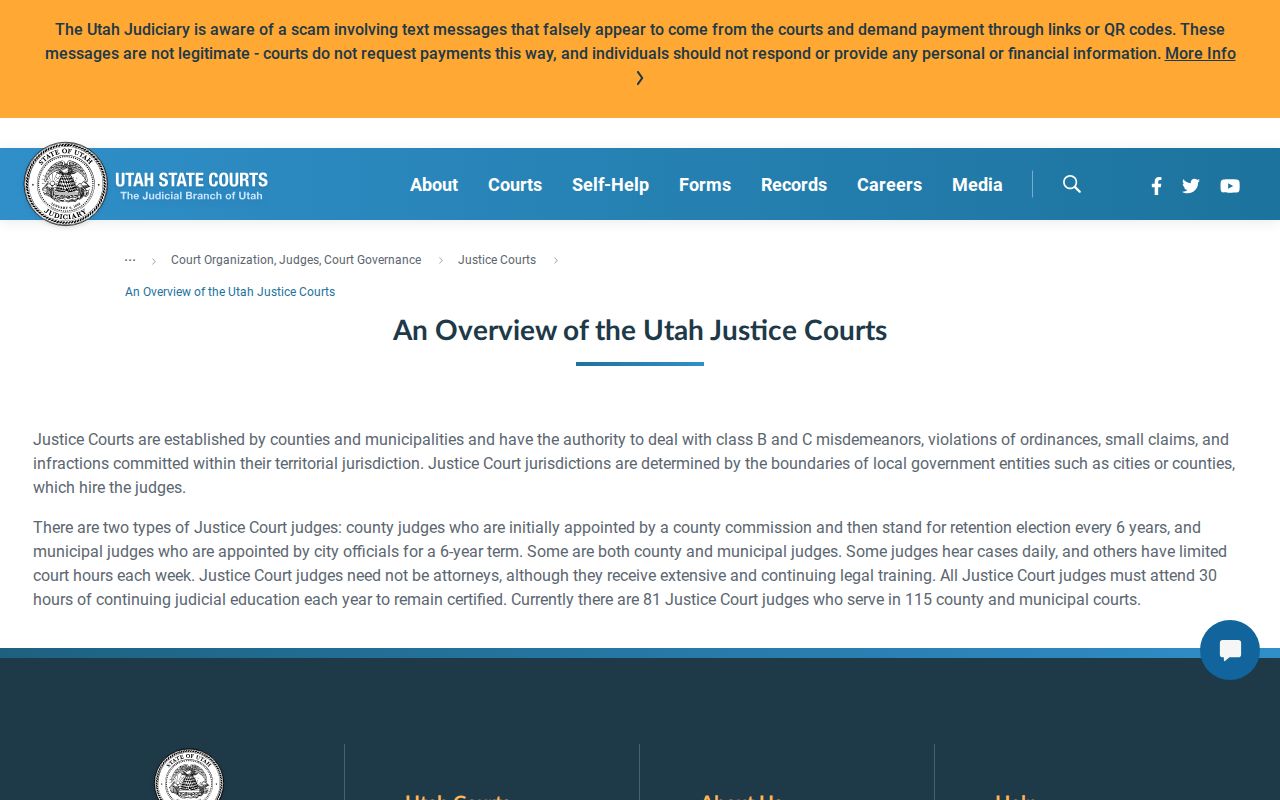
That tier of court hears local citations under Utah law. Still, the court printed on the ticket keeps the docket.
Class A misdemeanors and other jailable charges may belong in District Court instead. Juvenile traffic cases run through restricted Juvenile Court channels. They never appear in a public Xchange search. A citation's court file is also not the driver's history held by Utah's Driver License Division. Begin with the court named on the ticket. Track any new case if an appeal follows.
Utah Has No Separate Ticket-Only Search
Utah has no standalone ticket-only search. Xchange, the statewide public case-information service, covers eligible District and Justice Court matters, traffic included. Because citation numbers are not unique statewide, narrow any docket search by the issuing location. Older Justice Court tickets may predate local Xchange coverage. Juvenile, sealed, and restricted records stay out of public results. ePayments handles eligible court payments. MyCourtCase serves a party's own eligible case rather than a public name search. There is no statewide FTA or license-hold lookup either. When a result is missing, call the Utah court printed on the notice.
A federal-property violation runs through the unused separate federal Central Violations Bureau and PACER. It is not a Utah city or county ticket.
A missing Xchange entry can reflect coverage or access limits. The Utah court can check its own file.
Utah Citation and License-Hold Systems
Utah traffic records live in separate court, payment, and driver systems. None of them serves as a universal ticket-payment and license-hold portal.
| System | What It Holds | Run By |
|---|---|---|
| Xchange | Public history for eligible District and Justice Court cases, including traffic | Utah State Courts |
| Local Utah Justice Court | Official citation docket, hearing, disposition, and balance | Utah issuing court clerk |
| FTA or suspension status | No universal hold lookup verified; check FTA with court and license action with DLD | Utah court and Utah Driver License Division |
| Utah Courts ePayments | Payment for eligible cases; coverage varies by court and citation | Utah Judiciary |
| MyCourtCase | A party's own eligible case history, filings, and some payments | Utah State Courts |
| Driver License Division MVR | License status, reportable convictions, points, and department actions; restricted access | Utah Driver License Division |
Utah law does not say every unpaid ticket or FTA suspends a license. Courts track citations and court debt. The DLD tracks reportable convictions and licensing actions. A real suspension may take follow-up with both.
Utah Xchange Citation Search Fields
In Utah's Xchange, begin with the citation number and location printed on the ticket. Those numbers are not unique statewide. Under Jurisdiction, pick District, Justice, or both. Search Scope offers statewide, county, or a single court, and Case Type or a known case number can narrow Utah results further.
The Utah Courts Xchange help page lists Last name/Company, First Name, Birth Date, and date-range controls for filings, dispositions, and judgments. It does not spell out which fields are required or every live option. Each Search click is billable and capped at 500 results, so confirm any match against the court and location on the citation.
Utah's coverage table varies by location. If a recent ticket is missing, or an older one predates local coverage, ask the Utah court clerk to check the court file.
Citation numbers and case numbers are not unique statewide. Keep the court location with either number.
Looking Up a Utah Traffic Ticket
Pair the Utah citation number with its issuing court or location. Xchange finds eligible public District and Justice Court records. Only the local court confirms recent filings, the amount due, and appearance requirements.
- Read the citation for the Utah Justice Court, number, appearance instruction, and response date.
- Search Utah's Xchange with the citation number and location; narrow by Justice Court, county, or case type.
- Use the county directory for local routing, then confirm the court in the official Utah Courts directory.
- If no case appears, ask the Utah issuing court about recent entry or older records before treating the ticket as unfiled.
- Use Utah ePayments only for eligible citations, and verify the case name. MyCourtCase is for a party's own eligible matter.
Utah's statewide Court Dates calendar can locate a scheduled hearing. It is not a full citation docket, so confirm new settings or resets with the local clerk.
Utah Traffic Case Types and Docket Codes
Utah Xchange case-type codes label a court file, not the ticket's outcome. Charge level, plea, disposition, judgment, and payment are separate entries. Read each one with its case history and Utah's official glossaries.
- TN
- Traffic Citation file type in Utah's case glossary.
- TC
- Traffic Court Case code. A citation can become a case-managed file.
- IF
- Infraction file type. It does not show whether an appearance is required.
- DT
- Deferred Traffic Prosecution shorthand; not proof that terms were completed.
- FTA
- Failure to appear; read it with the court notice, order, and rule.
The Utah Courts case-type glossary identifies the codes shown with case numbers. A separate judgment and disposition code list distinguishes the code columns, and context matters when reading them.
Paying or Fighting a Utah Ticket
Utah Courts says most infractions need no appearance. They can be paid online or by mail to the court named on the citation. The ticket and the Utah fine schedule control the specific charge. To dispute it, contact the Utah court. Enter a not-guilty plea. Follow its hearing instructions. Keep in mind that payment never replaces an appearance the notice requires.
| Decision Point | Pay or Resolve | Contest |
|---|---|---|
| Action | Follow the ticket; use a payment channel the court accepts. | Ask the court how to enter a not-guilty plea and request a hearing. |
| Timing | Use the due date and appearance direction on the notice. | Meet the court's deadline and confirm the hearing date. |
| Record | The court records payment; some convictions are reported to DLD. | The court schedules a hearing; its order controls the outcome. |
| Online | ePayments covers eligible matters, not every Utah court or citation. | A payment portal may not accept a contested plea. |
Missed Payment or Appearance: Rule 4-701 applies only when a citation does not require an appearance. After 14 days, the court may add $50 and mail notice; after 40 days, it may add $75 and issue an FTA warrant.
This does not mean every unpaid ticket creates a license suspension. Utah Code section 53-3-221 generally bars suspension based only on an FTA, unpaid penalty account, or resulting bench warrant, subject to a narrow exception.
The Utah Driver License Division reinstatement instructions lay out the separate route when an FTA suspension exists. Resolve it in court first. Then obtain proof of clearance and follow Utah DLD's steps. The listed general fee is $40.
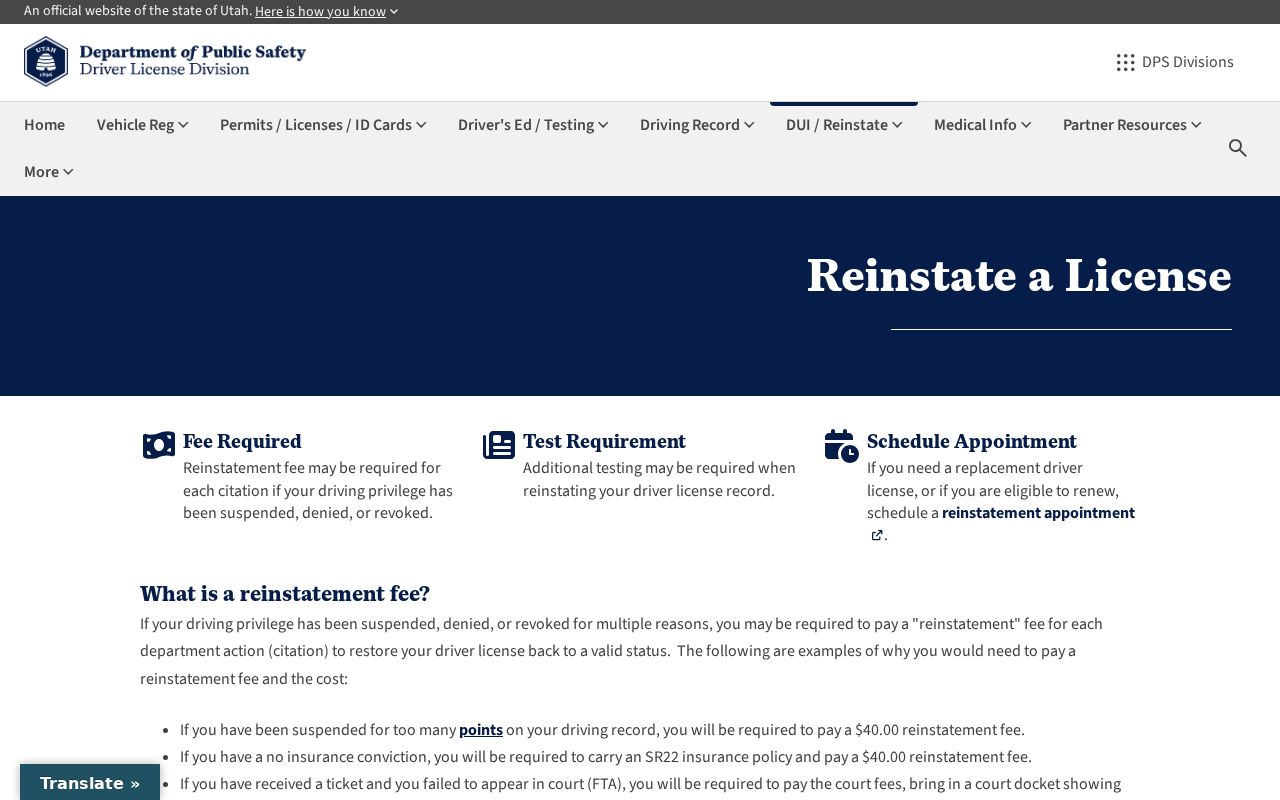
A Utah ticket really lives in two files. The court closes its own case entry, while the Driver License Division clears any license action, and a suspension can linger in one place after the other is done. Court clearance and DLD reinstatement are separate updates, so check with each Utah agency about its own record before assuming everything is resolved.
Check Utah Deferred Traffic Prosecution Eligibility
Deferred Traffic Prosecution is one option worth asking about. Utah's program can cover an eligible moving violation under Title 41, Chapter 6a, but only when the ticket was received no more than 21 days earlier. It is voluntary, and the individual citation and program criteria still govern. Read the Utah Courts eligibility instructions before doing anything. Use the party portal only if the case qualifies.
Finish the program and the case may end deferred or dismissed. Enrollment alone is no automatic dismissal, though. A DT code often flags Deferred Traffic Prosecution on a docket, but the code by itself proves neither that every requirement was met nor the final conditions, so read the court's terms and confirm the final order in the case history afterward.
A separate online dispute-resolution option for traffic cases exists right now. It appears only in Carbon County Justice Court and Orem City Justice Court. It is not a statewide route. The issuing court can tell you which choices, if any, fit your specific ticket.
Utah Court Record vs Driver Record
One Utah traffic ticket, two records. The court record documents the citation and every case event. The Driver License Division keeps a separate motor vehicle record covering reportable convictions, points, license status, and department actions. One file can be updated before the other. An entry in one does not prove the other is clear, since each record has its own holder, access path, and rules.
The court record belongs to the issuing Justice Court. District or Juvenile Court holds it when that court has jurisdiction. The DLD motor vehicle record is not part of Xchange. The federal Driver's Privacy Protection Act plus Utah's permissible-use rules restrict it. For an official court entry, ask the Utah court clerk. DLD controls its own driving-history file.
The Utah Driver License Division motor vehicle records page lays out the record types DLD offers. It also explains the limits on requesting them.
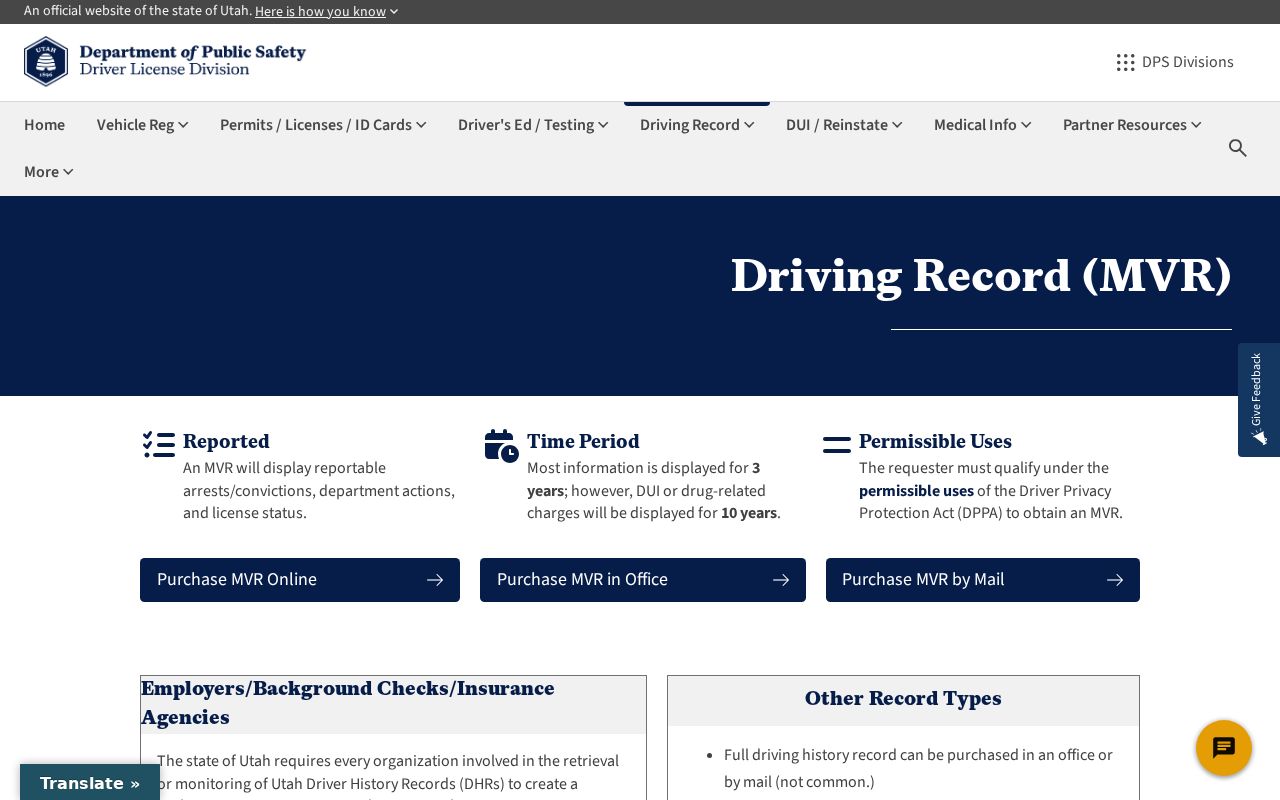
That DLD page is a separate agency record service. It is not a public court-ticket lookup, and it does not replace the court's citation docket.
| Utah Record | Court Citation Docket | Driver Motor Vehicle Record |
|---|---|---|
| Custodian | The issuing Justice Court clerk, or the court with jurisdiction | Utah Driver License Division |
| May Include | Citation, case number, hearing, plea, fine, disposition, order, FTA, and clearance | License status, reportable convictions, points, and department actions |
| Access | Search eligible case information in Xchange; ask the court for its current official file | Request through DLD under its restricted motor vehicle record rules |
| What It Does Not Prove | A paid or closed court case does not show that DLD finished processing a separate license action | A driver-history entry does not replace the court's filed order or case disposition |
Utah Courts is blunt on one point: expunging a traffic case does not by itself clear a DLD driving record. Resolving a court FTA can likewise require separate DLD reinstatement steps if a license action was actually entered. So verify both files with the office that holds each one.
Utah's Official Traffic Fine Schedule
For fine amounts, start with the Utah Courts Uniform Fine Schedule, Appendix C. It lists statewide fine and bail amounts for covered traffic and infraction offenses. The current Utah schedule is dated July 1, 2026. The schedule also marks which listed offenses require an appearance. Read it alongside the citation. The court, the charge, and the case account control the amount due and whether you must appear.
There is no single fine amount for every Utah traffic ticket. A listed figure guarantees nothing about added charges or the outcome of a contested matter. Utah Courts treats most traffic offenses as infractions or class C misdemeanors, with more serious conduct potentially charged at a higher level. Open the official Utah traffic fine schedule and the Utah Courts traffic instructions. Then ask the issuing Utah court to confirm the case balance and your response route.
Paying online brings its own quirks. ePayments asks for a citation or case number. It tells you to verify the case name before submitting payment. Not every Utah court uses the statewide service. Keep the amounts separate, too: Utah court fines, court copy fees, and any DLD reinstatement charge all bill independently.
Utah's schedule is a statewide baseline. The ticket and the Utah court account show what is actually due in a specific matter.