
Inside the Utah Court System
Utah runs four kinds of trial courts plus two appellate courts. District Court is the general-jurisdiction workhorse, hearing the widest range of civil and criminal matters. Justice Courts take local criminal cases, traffic tickets, ordinance violations, and small claims. Juvenile Court handles youth and child-welfare cases. The Business and Chancery Court covers a narrow statewide set of business and equity disputes. Appeals move up to the Utah Court of Appeals. Or they go to the Supreme Court under governing law.
Every Utah court keeps its own docket and file. There is no single county clerk for all state court records. District and Juvenile clerks serve court locations. Justice Courts rely on local clerks. The appellate courts maintain separate files of their own.
| Court tier | Typical Utah matters | Record custodian |
|---|---|---|
| District Court | Felonies, most civil cases, family matters, and probate | District Court Clerk at the court location |
| Justice Court | Traffic, infractions, ordinances, Class B/C misdemeanors, and small claims | Clerk of the local Justice Court |
| Juvenile Court | Youth delinquency and child-welfare proceedings | Juvenile Court clerk; access is restricted |
| Business and Chancery Court | Specified statewide business and equity disputes | Business and Chancery Court clerk |
| Court of Appeals / Supreme Court | Appeals assigned by law and review of lower appellate decisions | The clerk of the appellate court |
The Utah District Court overview explains what the general-jurisdiction trial court does. That page describes the court location, not county borders, as the key to the proper clerk.
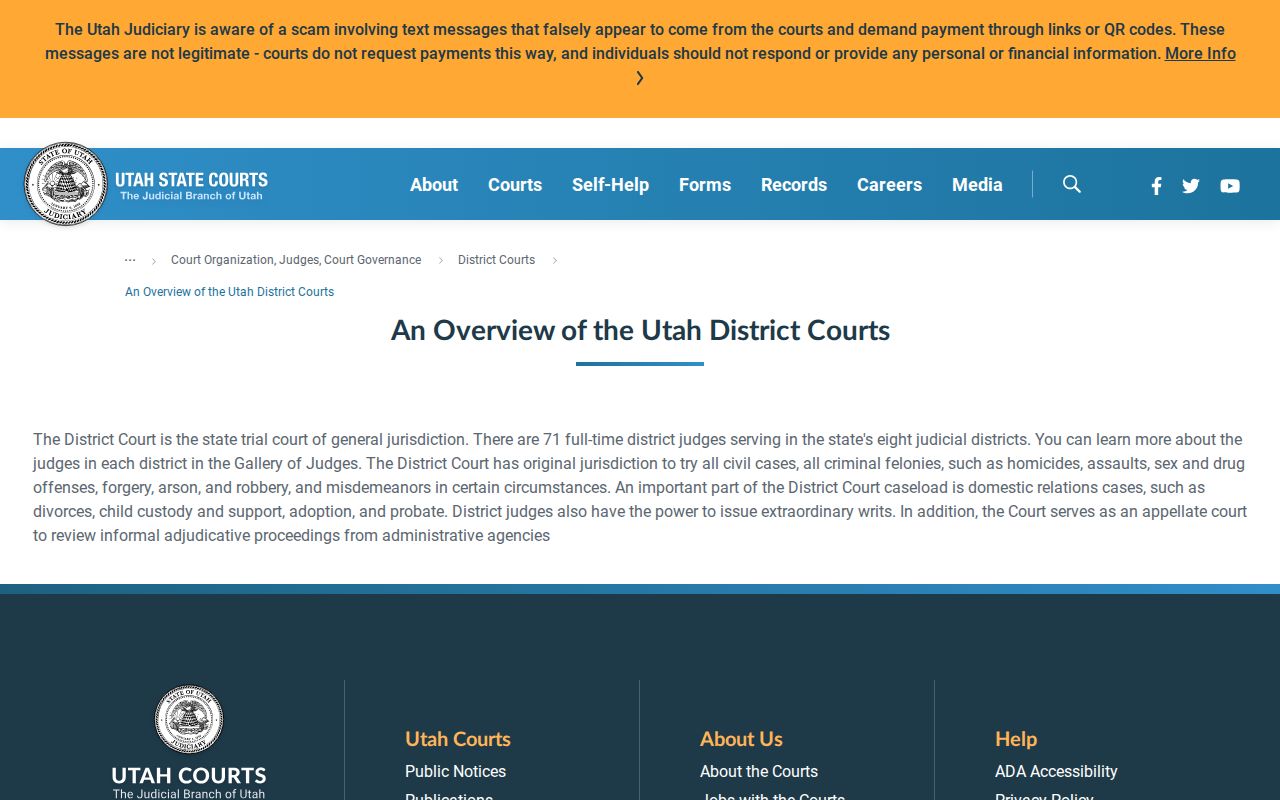
This profile sits the District Court docket inside Utah's larger structure. Limited-jurisdiction and appellate courts keep their own distinct records.
Utah Court Caseload By the Numbers
Eight judicial districts cover Utah's 29 counties. That does not mean a courthouse in every county. District and Juvenile Courts serve whole judicial districts, while Justice Courts stay local. The 2025 Utah Judicial Council Annual Report breaks down court and judge counts by tier.
The report logs 256,589 new District Court filings in FY2024. That is up from 248,229 in FY2023. The figure covers one court tier, not the whole state. For finer detail, Utah's statistics dashboard filters filings by court, district, county, location, case type, and fiscal year. You can also view the Utah court statistics dashboard for dated filing comparisons.
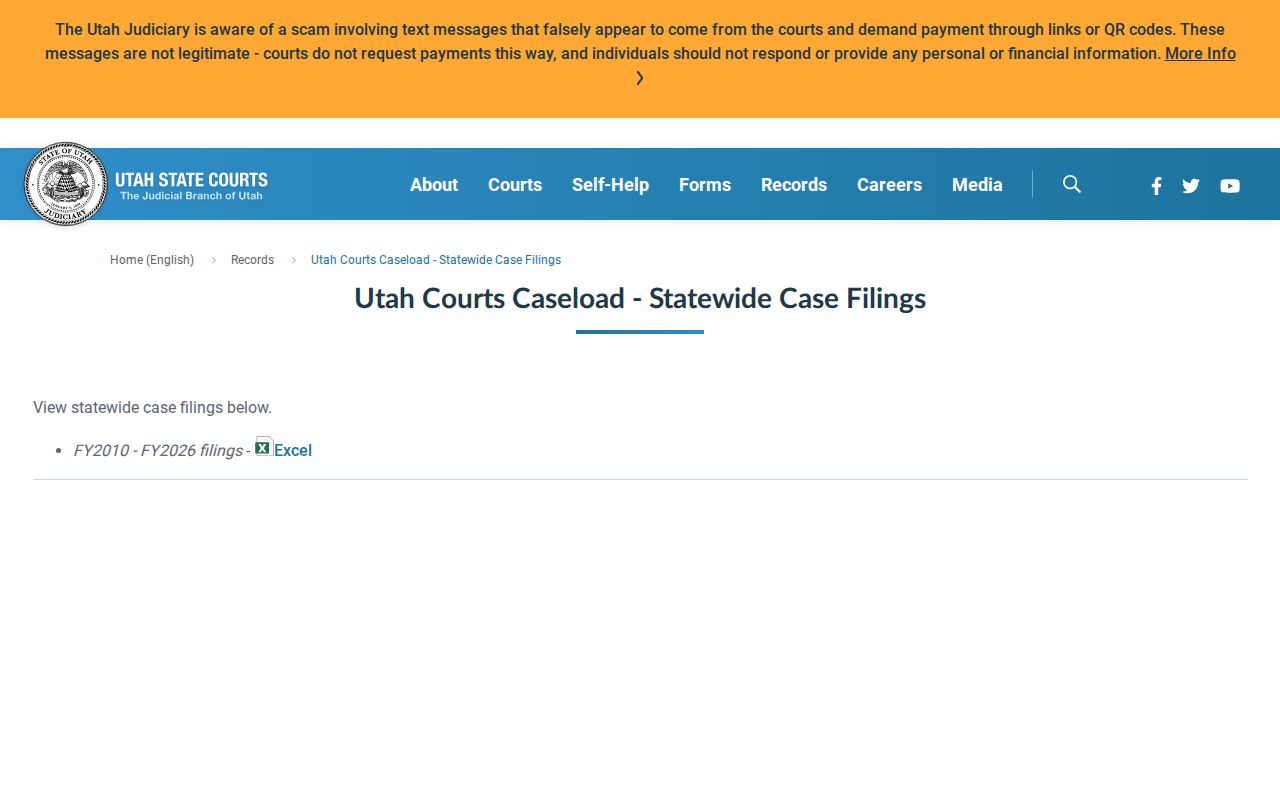
Carry the fiscal year and case category along with any number you cite. A filing total measures workload, nothing more.
Note: the FY2024 District filing count describes one court tier at one dated point. It is not a statewide total. It is not a forecast for any single case.
The Utah Statewide Search Portal
Utah Xchange: Public Case Search is the statewide index for eligible District and Justice Court information. It shows case history plus selected document links. The Utah Case Lookup page walks through the search fields and steps.
Remote Xchange access costs money. Free terminals sit in most Utah District courthouses and at the State Law Library. Some Justice Courts offer them as well. Parties in their own eligible cases can use MyCourtCase. The statewide calendar lists scheduled events, and appeals run through a separate search.
| Utah access channel | Use | Limit to keep in mind |
|---|---|---|
| Xchange, remote | Public District and Justice case index and history | Paid access; coverage and record classes vary |
| Public terminal | Free Xchange lookup at most District courthouses and the State Law Library | Justice Court availability differs by location |
| MyCourtCase | Party’s own eligible case, filings, payments, and notices | Not a public name search |
| Calendar / appellate search | Scheduled court activity or a separate appellate case | Neither replaces the originating court file |
Utah Rule 4-202.08 prices guest access at $10 per transaction for up to 10 searches, plus $1 per available electronic document. Xchange results are not clerk certification.
Where Utah Xchange Coverage Stops
Xchange does not reach every Utah court record. Juvenile and appellate cases travel other channels. Adoption, civil mental-health commitment, criminal nonappearance, sealed, and other restricted matters may be absent. Expunged cases come out once an order issues. Business and Chancery Court sits outside the index too, as a separate statewide jurisdiction.
Justice Court coverage depends on local CORIS start dates. Older paper cases may never have been converted. District document links also carry record and filing date limits. The Xchange coverage chart lists those dates by location. So check the actual document link for availability.
A clerk may have a recent entry before it shows in Xchange. Utah Courts promises no instant or nightly statewide feed. Ask the holding court about older or missing material.
Note: a missing Xchange result can simply reflect a record class or a location's coverage date. It does not by itself mean a case was sealed.
How Utah Dockets Reach the State Index
Every Utah docket starts in the court that has the case. A filing enters the official record there first. Staff maintain the case information, and eligible public events can appear in Xchange after entry. Participating District and Justice Courts work in CORIS. But the courts and clerks remain the official record keepers throughout.
County Filing → County Docket → Statewide Index: The court enters filings in its docket; Utah court staff at participating District and Justice locations maintain data in CORIS, then eligible public events appear in Xchange.
A submitted Utah e-filing does not appear in Xchange the moment you hit send, and courts do not all run the same system. Each court applies access rules to its own file. Juvenile and appellate records use separate channels entirely.
County lines will not point you to every clerk. Route locally with the Utah county directory, then confirm the court and clerk through the Utah Courts location directory.
Utah’s AOC Supports State Courts
The Utah Administrative Office of the Courts (AOC) backs the Judicial Council and statewide operations with administration, finance, technology, data, training, and public information. Utah's Chief Justice and the Judicial Council set policy. The Utah State Court Administrator leads the AOC itself. Shared systems never move custody of a case file away from its home court.
The AOC publishes reports and statistics and supports court technology. It is not the clerk for any individual District, Justice, or appellate case. Copies, corrections, and access questions go to the court holding the file.
Administrative Office of the Courts
Utah State Courts statewide administration, court technology, reports, and public information.
The Utah Courts administration page outlines the office's role and its support for the Judicial Council and the court system.
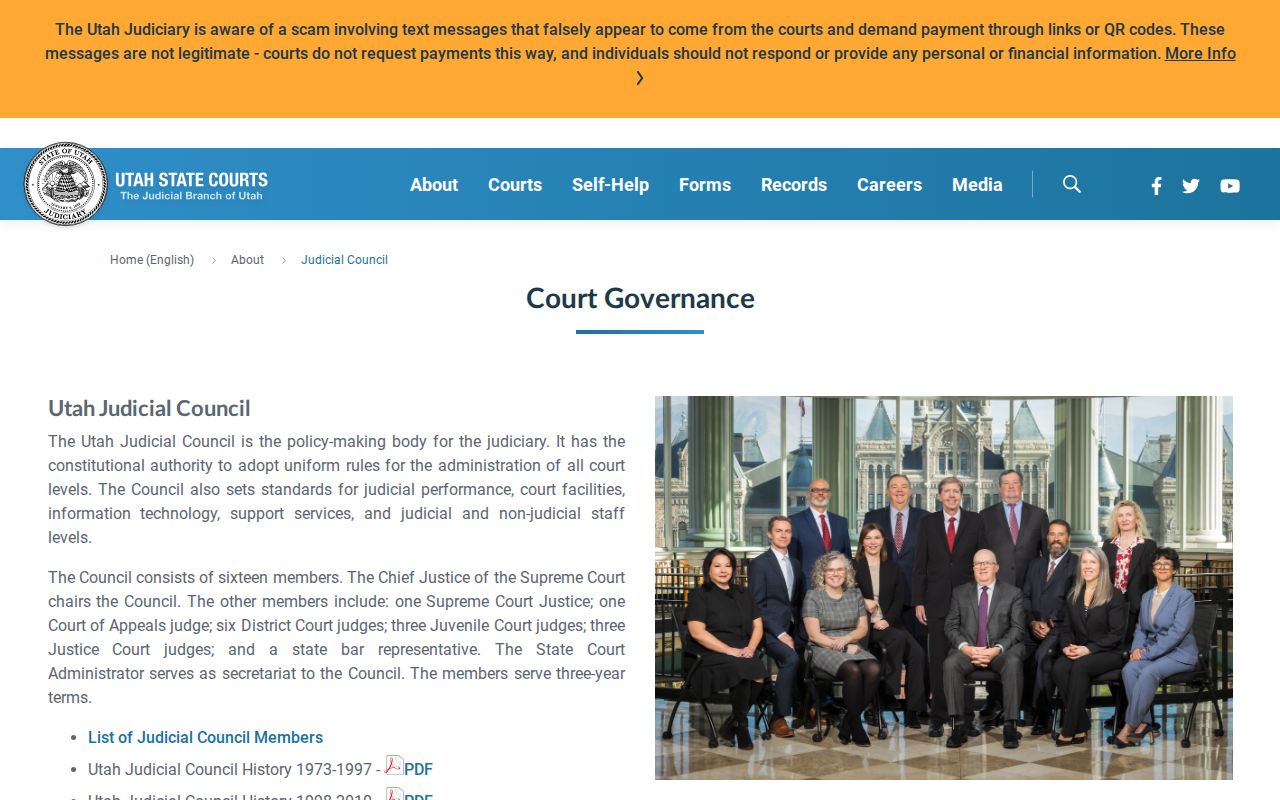
A case file stays with the Utah court that heard it. The Administrative Office of the Courts works at the statewide level.
The AOC can walk you through how Utah courts run day to day. It cannot pull up your particular docket. That request goes to the record-holding court itself.
E-Filing Through Utah Courts eFiling
Utah e-filing sends documents into a court. It is not a docket search for the public. District civil and probate filings run through an eFlex/Tybera portal, with certified Electronic Filing Service Providers such as Utah State Bar, GreenFiling, Judicialink, and CourtPath handling submission. The judiciary keeps a current certified provider directory, and that list shifts over time. A registered filer account plus the applicable filing fees come with the territory.
Rules differ by court and case type. Attorneys and licensed paralegal practitioners e-file District civil and probate matters under Rule 4-503, while Rule 4-603 and Rule 9-302 cover the criminal side. Juvenile and appellate work runs on other applications. A party without a lawyer can often file by authorized email, mail, MyCase, or at the counter, with no attorney EFSP required.
The Utah District Court e-filing login exists for registered filers. It is not a place to browse public cases.
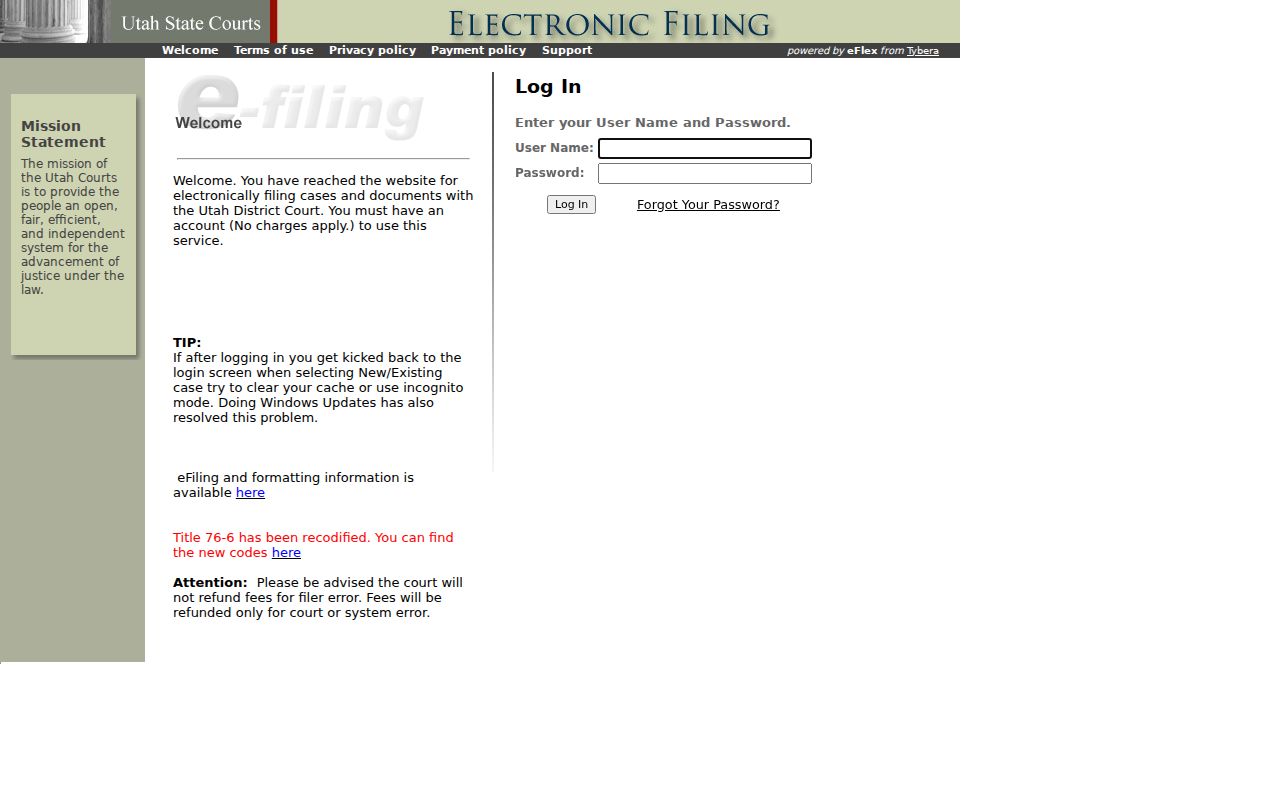
Turn to Xchange for eligible public case information. If a filing never shows up online, ask the court directly about it.
Utah E-Filing vs Public Case Search
A filing receipt and a search result answer different questions. The receipt proves your submission reached the Utah court. An Xchange result reflects eligible data the court entered into its public index. An accepted filing does not appear there instantly.
Privacy rules govern what filed documents show. E-filers must strip personal identifiers from public papers. Clerks do not review every document for each one.
So read carefully. A docket event can be visible with no public image behind it. A missing image does not mean the court lacks the filing.
When a paper is not online, contact the Utah court holding the record. Ask whether it is public and how to request it.
Note: A submission receipt shows court delivery only; a public index entry depends on later court entry and access rules.
Utah Portal vs County Docket
Utah Xchange tracks eligible District and Justice cases. It shows indexed public events. The complete Utah docket, filed papers, corrections, and certified copies stay with the court that holds the case, since Utah has no universal county clerk for every case type.
| Record need | Utah statewide Xchange | Local court docket and file |
|---|---|---|
| Find a case | Searches public District and Justice records within location coverage | Clerk can check the court’s authoritative case record |
| Follow events | Shows public history entered into the index | Official docket, orders, and minutes stay with the court |
| Read a filing | Selected documents may have a paid link | Clerk handles public filings not available online |
| Get a certified copy | Case-history printout is not certified | Official clerk issues a certified or exemplified copy |
Begin with the Utah county directory and pin down the actual court and clerk. The statewide index is a route to a case, not its official file.
Utah Appeals Open a Second Docket
An appeal opens a second Utah case. The Utah Court of Appeals or Supreme Court issues its own number and holds the briefs, orders, argument details, and opinion.
The trial docket keeps only the notice and the first steps.
Utah appeals sit outside Xchange. Use the public Utah appellate docket search instead. Attorney appellate e-filing is separate and mandatory under rules effective May 1, 2024, and the official appellate file comes from that court's clerk.
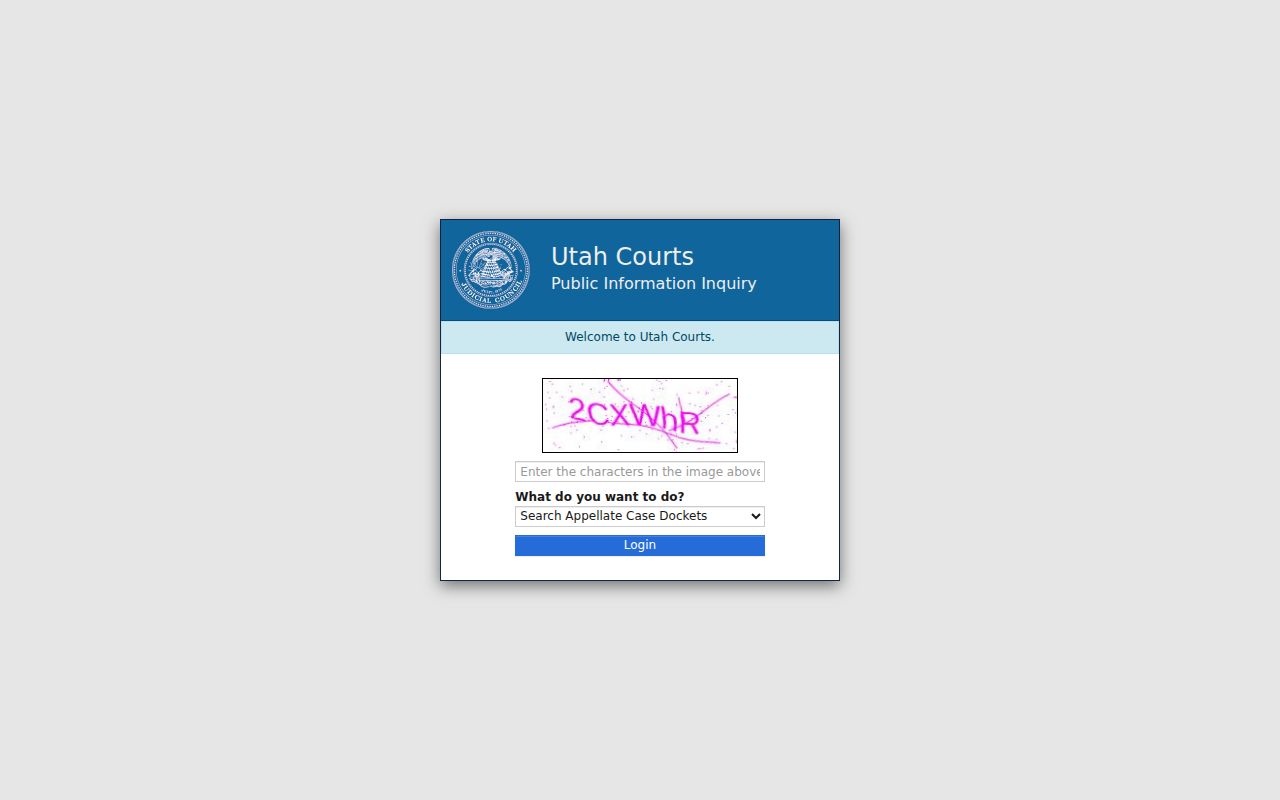
That appellate search reveals a docket layer beyond Xchange. An appeal carries its own number and event history.
Federal matters differ. Cases in the U.S. District Court for Utah or the Tenth Circuit run through channels such as PACER, not Xchange.
Utah Court Technology and History
Utah shifted from paper files to case systems, e-filing, and public indexes. The change came one step at a time. The judiciary reports Xchange subscription access to most public records beginning in April 2011. District documents cover filings from July 1, 2010.
Neither date marks a complete archive. Mandatory civil e-filing phased in during 2013. District criminal changes followed in 2014 and 2015. Appellate attorney e-filing rules took effect May 1, 2024. The Utah statistics dashboard arrived in 2024 with trends back to FY2010.
Court staff still keep the official records. Online tools expose only the material within their scope.
- 2011: Utah Courts reported public case records available through Xchange subscription.
- 2013–2015: District civil and criminal e-filing expanded in phases under court rules.
- 2024: appellate e-filing rules took effect, the statistics dashboard expanded, and Business and Chancery Court began hearing cases.
Each of these is an access milestone, not one statewide conversion date. Older paper records may still need a clerk request.
Note: Utah's digital milestones mark gradual availability, not a single day when every court record became searchable online.
Utah Adds Specialized Court Dockets
Utah's Business and Chancery Court is a statewide, limited-jurisdiction court. It handles specified complex business and equity matters, not ordinary county or criminal cases. It began hearing cases October 1, 2024.
Identify its venue and its clerk by the court's name. Do not assume its matters appear in Xchange.
Utah has also announced a Veterans Court program expansion. Locations can change, so consult current court information.
The Utah Courts Veterans Court announcement records one such court-program change.
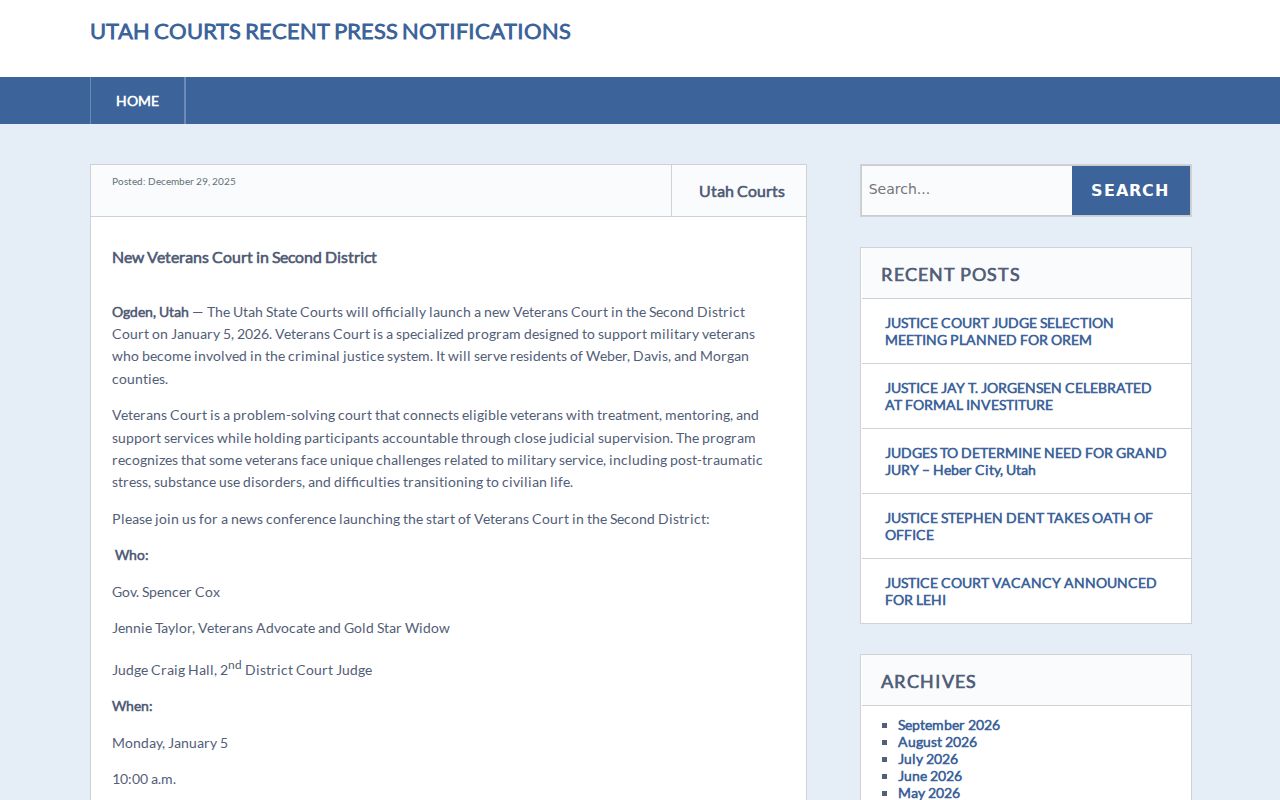
The notice records a program change; the Utah courts taking part still keep their own case files and dockets.