
Searching Utah Court Dockets
First, figure out the court. Utah cases land in District Court, a local Justice Court, Juvenile Court, the Business and Chancery Court, or an appellate court. That choice shapes everything after it. Xchange is the tool that searches public District and Justice Court case information across Utah. It does not reach every case type. What it returns is an index, not the court's official file. Need a full history, a filed order, or a certified copy? Contact the Utah clerk at the court location holding the case. The Utah county directory routes a search to local court information whenever the statewide index comes up short. The same directory helps when the case sits in a separate system. A good Utah court docket search names the tier. It runs Xchange, then turns to the clerk for the official record.
- Choose the likely court level. Felonies and most civil matters start in Utah District Court; traffic, infractions, many local misdemeanors, and small claims commonly begin in a Justice Court.
- Search Xchange by party name, case number, court type, or location. Use a wildcard for name variations, and narrow a number by court because identifiers are not unique statewide.
- Open the Case History or Extended Case History result and note the Utah court, case type, number, parties, and newest visible event. A document Purchase link appears only when a file is available electronically.
- Check Utah's statewide Court Calendar for a hearing, then confirm a recent change with the court. A calendar refresh does not guarantee that a new reset is already displayed.
- For a complete docket, older file, signed order, or certified copy, contact the Utah record-holding clerk. Use the Utah county directory to reach local court resources.
Xchange Search Fields in Utah
Utah Courts calls its product Xchange: Public Case Search. The published help lists the filters you can apply. Choose Utah District Court, Utah Justice Court, or both. Then set the scope statewide, by county, or to a specific court. You can also narrow by case type. A party name or company works too, or a case number. For Utah traffic matters, citation number and citation location help cut the matches. Other controls cover filing dates, case dispositions, judgment entry, and judgment disposition. The live choices vary, and the help does not mark every field as required.
| Field | What It Does | Utah Search Note |
|---|---|---|
| Jurisdiction | Limits the search to Utah District Court, Utah Justice Court, or both. | Choose the court tier that fits the case. |
| Case Number | Looks up a Utah court-assigned identifier. | Not unique statewide; add court or location. |
| Last Name / Company | Searches an individual or business caption. | Utah Courts recommends an asterisk wildcard for name variations. |
| First Name | Narrows an individual name search. | Try a prefix wildcard if spelling or middle initials may vary. |
| Case Type | Filters by the Utah court's case category. | Use the official code glossary rather than inferring a result from a code alone. |
| Search Scope | Sets Utah statewide, county, or specific-court scope. | Location choices are dynamic and not fully listed in the help text. |
| Citation Number / Location | Narrows a traffic citation search. | A citation number can repeat across courts, so location matters. |
| Date Range | Filters filings, dispositions, judgments, or judgment dispositions. | The help does not state a universal date format or range limit. |
A guest transaction caps out at 500 results. That limit rewards a tight search. Use an asterisk to broaden a name. Then pare down common matches by case type, filing date, and court location. Once the Utah venue is clear, the clerk can search the authoritative file directly. Note: Utah's public help does not mark every search field required. So one field alone does not decide whether a search runs.
Inside the Utah Statewide Case Search
An Xchange result can show a Utah court location, case type and number, filing date, party names, events, and available documents. The "Extended Case History" adds proceedings and minutes beyond the summary. Even printed, it stays an index view rather than a certified court copy. The Utah State Courts' Administrative Office of the Courts administers Xchange under Utah court-record rules. Juvenile and appellate dockets fall outside its ordinary Utah search. So do federal filings, sealed matters, and some older Justice Court files. Document images are selective. A Purchase control marks an available file. The Utah Court System overview explains how filing, case management, and public search fit together.
Why a Utah Case May Be Missing from Xchange
An empty Xchange search does not mean a Utah court never opened the case. Check the spelling, the court tier, the location, and the dates. Case and citation numbers can repeat. Broad searches cap at 500 results, and fresh filings may still await staff entry. Xchange also excludes juvenile and appellate searches, adoption, civil mental-health commitment, sealed, and expunged records. A family case history can stay public while its filings stay private. Older Justice Court files may predate local CORIS use. When a public case is missing, find the holding clerk in the Utah Courts directory. Use the Utah Request for Record form if the file is archived. Note: Case-number and citation collisions are expected across Utah courts. So add the court location whenever you know it.
Which Utah Courts Keep Dockets
Utah's trial courts are District, local Justice, Juvenile, and the limited statewide Business and Chancery Court. District Court holds general jurisdiction, while Juvenile Court handles youth and child-welfare matters. The Court of Appeals and the Utah Supreme Court keep separate appellate dockets. Boundaries take some care. The state's eight judicial districts do not line up one-to-one with county lines. Its city or county Justice Courts do not either. Use the Utah venue printed on a citation or case paper. That pins down the courthouse and its clerk. District and Justice Court clerks each maintain their own official files.
| Court | Docket Covers | Where to Search |
|---|---|---|
| Utah District Court | Felonies, most civil matters, family cases, probate, and applicable class A misdemeanors. | Xchange for public index; District Court clerk for the official file. |
| Utah Justice Court | Local traffic, infractions, ordinances, class B/C misdemeanors, and small claims. | Xchange when covered; the specific Justice Court clerk for the full record. |
| Utah Juvenile Court | Youth delinquency and child-welfare matters. | Restricted court process; no general public Xchange search. |
| Business and Chancery Court | Specified statewide business and equity cases. | Its own clerk and court directory listing. |
| Utah Court of Appeals / Supreme Court | Appeals and other matters assigned by law. | Separate appellate docket search and appellate clerk. |
How Utah Dockets Reach the State Index
A Utah e-filing submission goes to the court, and staff maintain the case in CORIS or that court's own case-management system. Public District and Justice Court entries can then surface in Xchange, subject to its coverage and record-class rules. A new filing is not guaranteed to appear immediately.
County filing → court case record → public Xchange index is the usual Utah District or Justice Court path. A Utah calendar, case-history summary, MyCourtCase account, appellate docket, and certified copy answer different questions. The Utah filing dashboard tracks trends, not individual cases.
Read the venue on the Utah case paper or citation first. Then follow the Utah county directory to local court resources when you need the clerk or the complete file. Note: A filing shows up online only after court entry, record classification, and location coverage allow it; there is no guaranteed real-time statewide feed.
What a Utah Court Docket Shows
An Xchange history may list the court, number, case type, parties, charges, events, and balances. The Extended Case History can include more minute entries. What appears depends on what court staff entered and the record's access class.
| Case Number | The Utah court identifier; Utah Courts says the first two digits indicate filing year, but a number is not unique statewide. |
|---|---|
| Parties | Utah case names and role codes can include plaintiff, defendant, petitioner, respondent, or other case-specific roles. |
| Case Type | A code such as traffic citation TN or traffic court case TC labels the category, not the final result. |
| Proceedings | Utah case events and minutes in date order; the extended history can include more detail than the summary. |
| Judge and Attorneys | The current assigned judge and counsel may be listed, but a judge assignment alone does not confirm who will hear a particular setting. |
| Account Summary | Some histories show revenue, trust, fine, or fee amounts due, paid, and remaining. |
| Documents | A Purchase link appears for an available electronic file; a history printout is not the same as that filing. |
| Setting | Calendar information is a separate lookup and a recent hearing change should be verified with the court. |
Utah Xchange gives clues, not conclusions. It may not list a bond panel, a single status label, or every hearing date in a case. A code is only shorthand. For a sentence, a judgment, a balance, or the current setting, open the underlying document or ask the court that holds the file.
Utah Case History Terms in Plain Language
Short codes and labels in a Utah case history describe an entry, not the full ruling. Read the event line together with the filed paper before trusting a shorthand disposition.
- Extended Case History
- The Xchange view reached through the case-number link; it includes additional minute-entry information.
- Disposition
- The recorded outcome for a case or charge. The actual order controls the terms and effect.
- Continuance or reset
- A scheduled event moved to a later date. Read the newest notice and verify the replacement setting.
- Certified copy
- A copy authenticated by the court clerk, distinct from a printed Xchange history.
Utah's code tables can give one short abbreviation different meanings. That depends on the field, judgment or disposition columns. Check which field you are reading. Turn to the Utah Courts glossary first, then ask the clerk about the filed order. If a recent Utah hearing looks changed, confirm with the court location.
Utah Public Access to Dockets
Utah court records run under UCJA Rule 4-202. Public access is the default. Even so, a case or a document can be private, protected, safeguarded, or sealed. GRAMA supplies the general public-record framework, while judicial rules and orders govern the case files themselves. A visible Utah docket does not make every attachment public. For access, use remote Xchange for eligible District and Justice Court information, a free terminal at most District courthouses or the State Law Library, or a request to the holding clerk. The statewide Request for Record form covers plain and certified copies. Standard responses are due in 10 business days. Qualifying expedited responses are due in five. Those are response deadlines, not delivery promises.
Key Utah Access Rules
UCJA Rule 4-202.02 sets the public, private, protected, safeguarded, and sealed classifications for court records.
Utah Code § 63G-2-301 defines public records under GRAMA, while court case files also follow judicial rules and orders.
UCJA Rule 4-202.04 explains how to request a court record and how nonpublic access requests are handled.
UCJA Rule 4-202.07 allows an appeal from a written access denial within 30 days.
Free and Paid Utah Docket Access
Utah prices each service separately. Inspection is free, but remote Xchange transactions cost money. Free terminals sit in most District courthouses and at the State Law Library, and Justice Court access varies, so call before traveling. The Utah Judiciary describes its public-terminal option on the CORIS and Xchange access page.
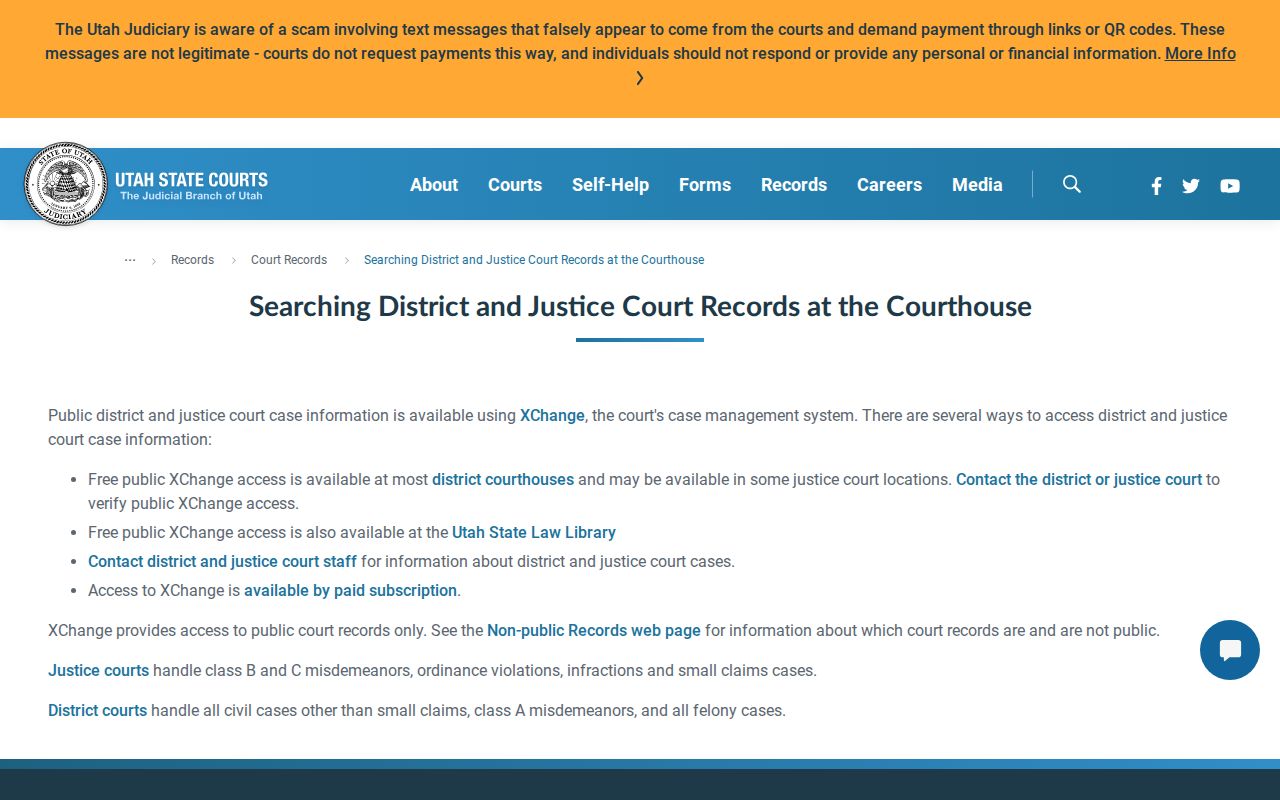
That courthouse and State Law Library path lets anyone inspect eligible case information without paying for a remote guest transaction. For an official copy, the court clerk is still the source.
| Access Need | Utah Rule Amount | What It Covers |
|---|---|---|
| Xchange guest search | $10 | One transaction with up to 10 searches under current Rule 4-202.08. |
| Public inspection | No fee | Inspection of a public record; staff time can be charged in defined cases after the first 15 minutes. |
| Paper copy | $0.25 per sheet | Uncertified copy of a court record. |
| Certified copy | $4 per document plus $0.50 per page | Clerk-authenticated court copy. |
| Available Xchange PDF | $1 per document | Electronic file where a Purchase link is shown. |
Rule 4-202.08 sets the remote rates. Plan on a $25 account setup. Budget $40 per month for up to 500 searches, and $0.35 for each search beyond that. Older registration text may show a different price, so check the rule for current amounts. Utah filing, search, copy, audio, and transcript charges are separate. Ask the Utah clerk about payment and archives.
How Utah Court Dockets Went Digital
Utah moved from paper to online access in stages. Civil District Court e-filing began in 2013, and criminal e-filing expanded in 2014 and 2015. Xchange subscription access began in April 2011. July 1, 2010 describes the District Court electronic documents covered by current portal information. Neither date means every case document is online. The Utah Courts statewide filing statistics dashboard makes trend data available by fiscal year, court, county, location, and case type.
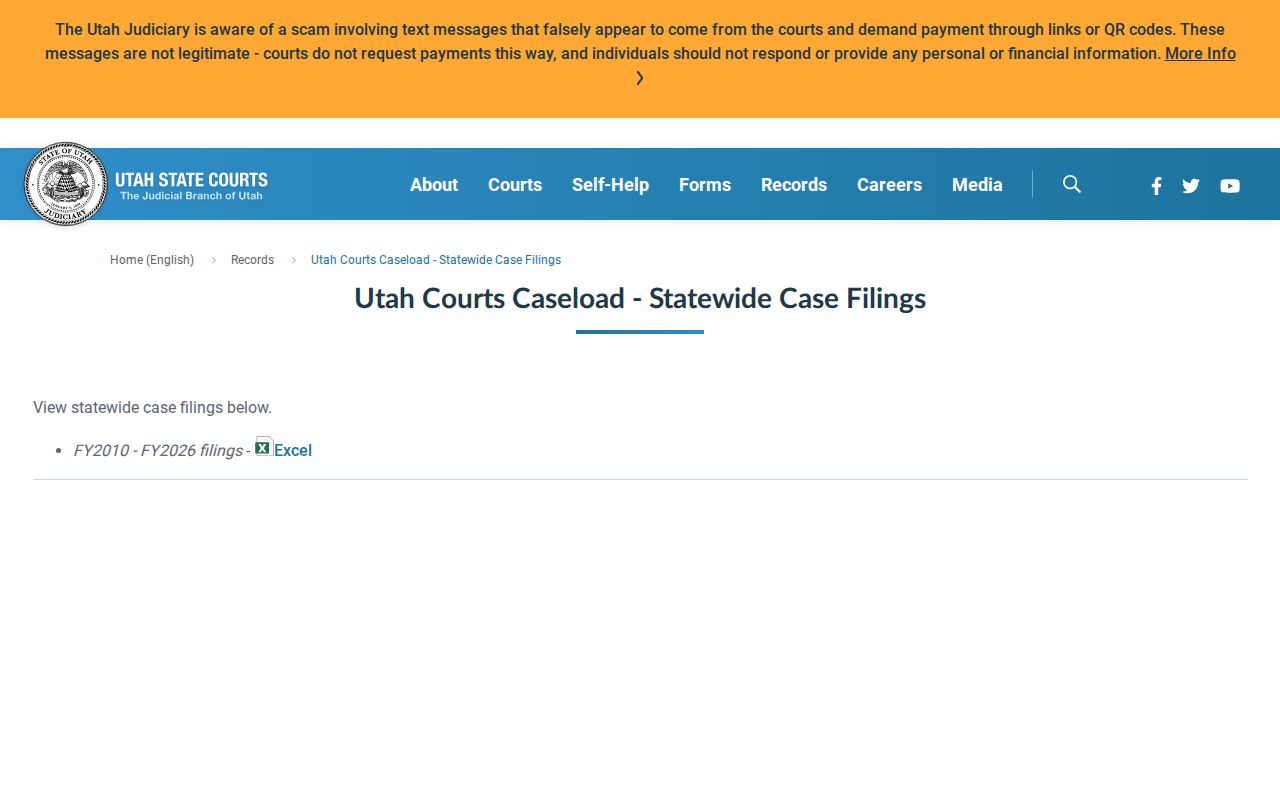
The Utah dashboard shows aggregate activity, not events in an individual Utah docket. Use its filters to compare court type, district, county, courthouse, case type, and fiscal year back to FY2010. It supplements Xchange. For an official case file, the Utah court clerk remains the source. Utah opened Business and Chancery Court on October 1, 2024. The 2025 Annual Report counts 256,589 new District Court filings in FY2024, up from 248,229 in FY2023. Those are District Court figures only, not total Utah trial, appellate, federal, or specialty-court filings.
Utah Appeals Keep a Second Docket
An appeal opens a second Utah docket in the Court of Appeals or Supreme Court. It carries its own number, filings, orders, briefs, and oral-argument settings. Track progress with the Utah appellate public docket search; published opinions sit in a separate search. A trial docket may show the notice of appeal or record transfer, but the appellate docket follows the case afterward. Search each Utah court with its assigned number. The appellate docket can carry a distinct number even when it follows a trial-court case. Federal matters use PACER and CM/ECF, outside Utah Xchange.
Recent Utah Court Access Changes
Utah's current Rule 4-202.02 classification took effect May 18, 2026, updating record categories and victim-identifier protections. A 2026 victim-privacy law applies only when its statutory criteria are met, so it does not erase every earlier public docket. When a name or filing is missing, check the current rule. The Utah Judiciary announced a Second District Veterans Court in December 2025. Utah service began January 5, 2026, after the 2025 Annual Report snapshot, so program counts depend on the report date. For temporary Utah office or hearing changes, check live Utah Courts notices and confirm with the location before traveling. The Utah Judiciary maintains a directory of problem-solving court programs with current statewide program information.
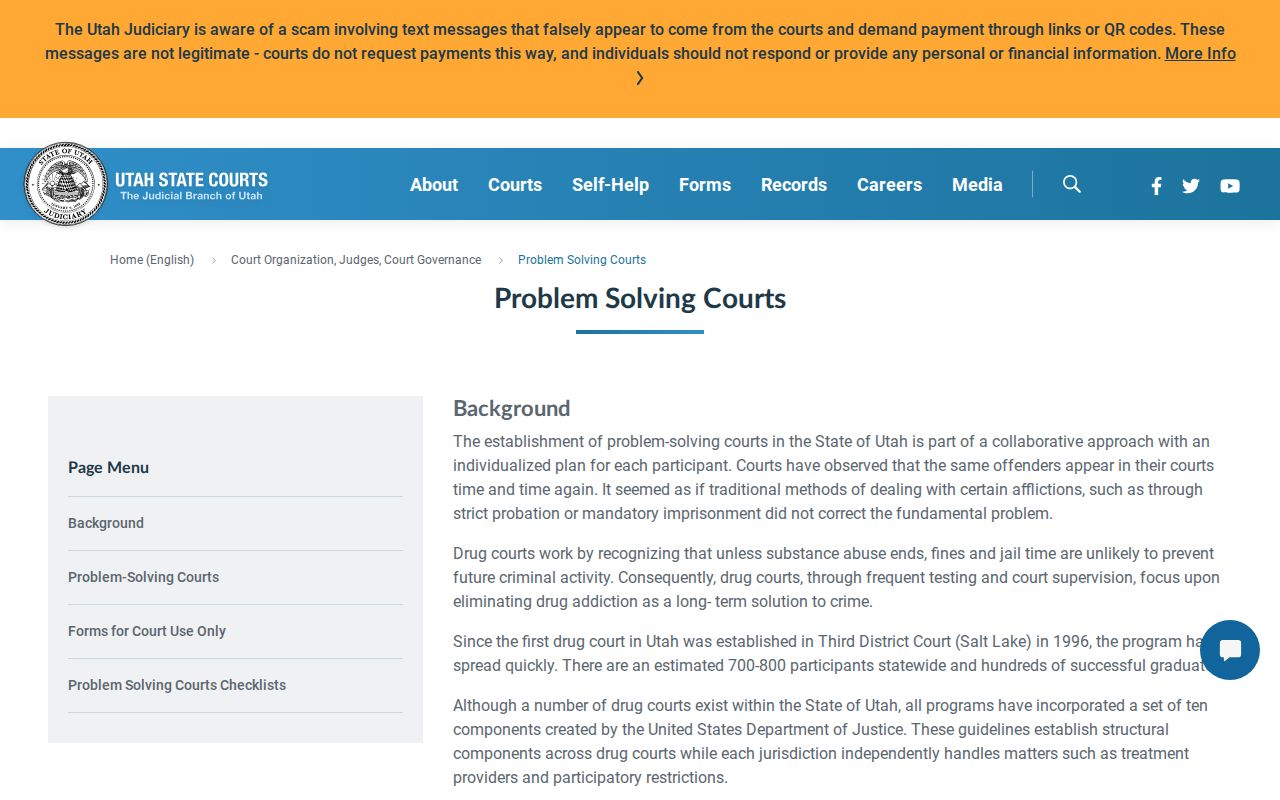
That directory lists programs, not cases. Use Xchange or the relevant court clerk for an actual Utah case record.
Court Dockets by County in Utah
The record-holding clerk keeps the complete docket. Local Justice Courts manage their own traffic, ordinance, misdemeanor, and small-claims files. Utah's most populous counties also have multiple court locations, so a county name alone may not identify the right venue. These six county homepages are a starting point. Use the court name on the case or citation to narrow the location.
Salt Lake County
Salt Lake City · Utah's largest county, with court locations including Salt Lake City and West Jordan.
Utah County
Provo · several Utah court locations, including American Fork, Provo, and Spanish Fork.
Davis County
Farmington · Utah District and Justice Court locations serve the county; Veterans Court serves this area.
Weber County
Ogden · Utah court locations and Second District Veterans Court service.
Washington County
St. George · regional District and Justice Court service in southwest Utah.
Cache County
Logan · Utah small-claims venue guidance includes a local exception to check.
Open the directory of all 29 Utah counties to reach the court docket and case lookup pages for any local court.